
A picture is worth a 1000 words but can it be worth £1000. Putting a price on photography has always presented itself as a bit of a challenge. How much should I charge is one of the most frequent questions I am asked. Here is my guide to getting it right.

I shot this into the light in the sweltering Brisbane sun using a Nikon D3 with a 70-200mm f/2.8 lens.
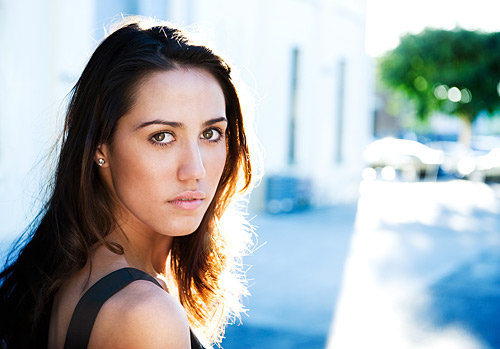
Late afternoon light in Brisbane with cool shadows gives this 'over the shoulder' portrait a colourful look. Nikon D3, 70-200mm f/2.8 lens.
I’ve identified three systems of pricing that I want to share with you here. Let’s take a look at each system and identify the merits and pit falls.
System 1 – analyse your costs and mark up by a percentage.
System 2 – as system 1, but factor in a time value.
System 3 – reverse pricing. Set your prices on your product’s perceived value.
System 1. In order to do a cost analysis I’ll split costs into two groups. 1) Direct costs – these relate to the specific job at hand. For a wedding, these would include the album, prints, dry cleaning, and mileage. A direct cost is one that wouldn’t be incurred if the job hadn’t been undertaken. 2) Fixed costs – are those that are incurred whether you have any work, or not – computer depreciation, camera depreciation, trade association subscriptions, insurance, utilities, rent rates etc. In between, are acquisition costs – advertising, letterheads, business cards, websites etc. For simplification I’ll add these into the fixed costs and call it a marketing budget.
I’ve created some simple figures for a portrait photographer as an example…
If a photographer has fixed costs of £8,000 per annum and has 100 location portrait jobs each year, that’s two jobs a week, the proportion of their fixed costs applicable to each job will be £80. If they then had average direct costs associated with each job of £120 (that’s mileage, printing and framing etc.), each job would have a cost base of £200.
So in order to get a £50,000 per year profit, they would need to do a 4 times mark up on their costs, so the photographer would make an average charge of £800 to their clients per portrait. This would equal £80,000 for the year, less costs of £20,000 = £60,000. Less VAT = £50,000. Restaurants use this system for pricing both wine lists and menus. A restaurant with tablecloths and candles and a nice ambiance can typically charge a 4x mark up on direct costs for food and wine. Whereas a pub with wooden tables may charge a 3x mark up.
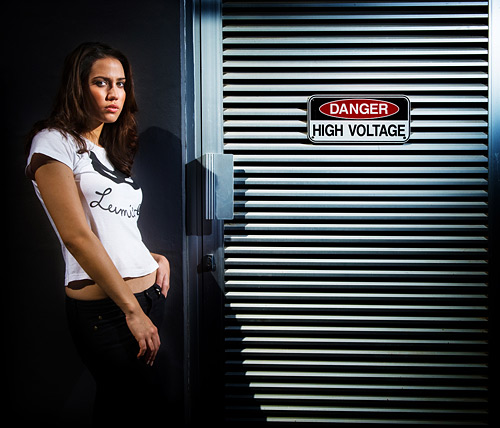
Midday in Brisbane. Lit with my trusty SB800 flash stand mounted from the right. The shadow to the right of the model is from the sun.

Here's a picture I took indoors at the 'Brisbane Power House' venue. Markus Bell just happened to be having lunch with his team at the restaurant whilst I was giving my workshop. Small world! Natural light from a window.
System 2 – this is similar to system 1, but with a time based factor built in. In order to set a price for your goods and services using system 2 you need to calculate how long it takes you to produce your products and set a price for them using an ‘hourly rate plus costs’ formula. Just as an added complication, a photographer is typically worth more per hour taking pictures than they are editing or post producing them. Again, I’ve simplified the numbers in these examples for clarity.
For this example I will use a wedding photographer offering album based product packages.
The photographer has operational annual fixed costs of £8,000 per annum and shoots 20 weddings a year. This equates to fixed costs of £400 a wedding.
Direct costs – travel and sustenance = £80, wedding album = £300, prints = £100, dry cleaning = £20, acquisition costs (marketing) = £300. Totaling £800 per wedding x 20 weddings per year = £16,000 per annum.
So the total costs are £24,000 for the year giving an individual wedding cost of £1200.
Lets look at the photographers target income based on hourly rates. If the photographer is worth £800 for the day taking pictures and £200 for each of the 5 days it takes to do the post production, gluing and sticking and album design etc. The bill for the time should be £1800 per wedding. So if we use pricing system 2 we can do a 2x mark up on the costs plus the time fee giving us an average income or total sale price of £4000 per wedding. It sounds a lot doesn’t it? How would a package be priced to give that type of return?
Package A: £2500 to include all the photography, an album and the first 50 pictures. Extra pictures in the album are £20 each. Parents albums from £500.
If extra sales averaged 50 pictures at £20, plus a parents album at £500.The total client spend would be £4000 It’s important to note on this pricing policy that there is some room for performance related pay. The better the pictures the more the client will spend.
The profit for the year can be calculated as 20x income of £4,000 = £80,000 less £16,000 expenses = £64,000 less VAT = £52,000
The actual day rate can be calculated as follows: each wedding consists of 6 days work (1 day to shoot the wedding, plus 5 days of post production) x 20 = 120 days work per annum for a profit of £52,000 = £433 a day.
This is the system used by builders. It’s a mark up on costs plus a day rate.

A bit of a moody dark picture with a sinister glare. I took this in Melbourne using a Nikon D3.
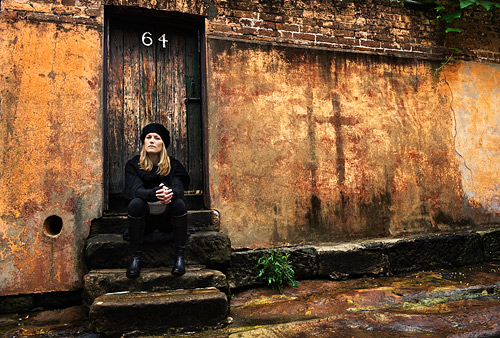
Another moody shot. This time taken out in the open at 'The Rocks' in Sydney.
System 3 – reverse pricing.This is where you set your prices on your product’s perceived value. In simple terms you identify how much a client will pay and you price your products at that level. You can look around you at the prices other photographers are charging for work of a similar quality and set your fees on their prices. If you have a USP or a brand, this is a bad idea. There really is no point trying to compete on price because you will loose out on profit. If you have a USP or a brand you can charge way above the average charged by the mainstream. You could even be a radical wedding photographer and auction your diary dates. Damien Hurst, had a radical shift in the way he sold his work and used an auction process. Might this be the right strategy for you?
Art galleries and estate agents use system 3. The value of a piece if art is independent of its manufacture costs. A bigger painting with a bigger canvas and more paint doesn’t necessarily cost more than a smaller painting; the content is king. A big house in a poor location that was expensive to build doesn’t necessarily cost more than a smaller, cheaper one in a better location. It all comes down to what someone is prepared to pay for the property. The trick is to start with an inflated price and accept the highest offer. This system lets market forces dictate the price.
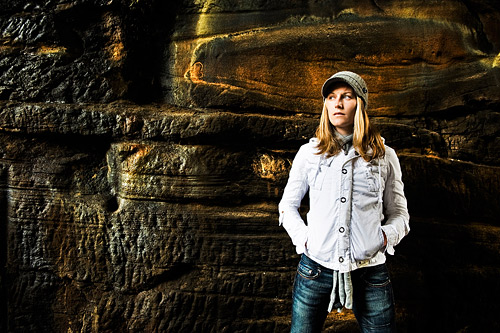
Taken just with natural light in a tunnel in Sydney.

Taken moments later using flash. I zoomed my SB800 in to 105mm and mounted it on a stand.I triggered the Speedlight with an SU800 commander.
Conclusion– There will probably be a combination of all three systems in your pricing strategy as a social photographer, because the better your work, a higher value someone will put on it and this perceived value is very much a factor in what you can charge. Setting your price involves a process of mathematical calculation to ensure you have sufficient profit then stand back and readjust the prices based on the perceived value. If there is a big discrepancy then you can change the perceived value by improving the product or you can reduce costs.
If your work is over-priced then your marketing budget will have to rise disproportionately in order to achieve a given number of bookings. A system of constant promotion to generate new leads is vital if your work is over priced as you will not be able to rely on repeat business. If your work is under-priced you will always be booked up well in advance but you will be selling yourself short and not reaping the profits you deserve.
Whatever system you use to price your work, do extrapolate your financial data to calculate an hourly rate. Know how much you are worth. Every now and then you will be asked to price a commercial shoot and if you know your hourly rate it’s a good thing.
I suggest you have an element of performance related pay is built into your price list. The more pictures your client orders the more money you earn. This helps your self-justification and self esteem.
Don’t rely too heavily on after sales or ‘up sales’. If you want to sell 120 pictures in a wedding album keep your package close to that level – say include the first 80 pictures so the spend after the wedding is considerably less than the initial fee. In the 90’s it was fashionable to have a lower priced package including just a few photographs, say 25 and then sting the clients later when they came to a viewing. This is a bad idea for several reasons; Your clients will have already spent all their money on the wedding, and the honeymoon. The hotel will have been paid, the florist, the suit hire company etc. and it is never a good idea to be last to get paid for a job. Your clients will resent you ‘holding back’ pictures that they want but can’t afford, after all, they have already paid you to take the pictures.
In this article I explain why you might benefit from offering pictures on disc.
Please feel free to comment on this feature. Let me know if my maths is wrong and generally discuss your pricing policy ideas. Damien.
Thanks for this Damien. There is also some good stuff if you google “stacy reeves pricing guide” and some helpful spreadsheets that go with it. We’ve increased our prices accordingly and feel much more comfortable that we have a sustainable business model; the trick now will be keeping the bookings rolling in.
Great post on a really tricky subject. Pricing photography has always been tough and this explains a really helpful strategy.
Thanks
Nick
Thank you Nick.
I glad it was of use.
Damien.
Thanks for the wonderful post!
Thanks Myrl.
How much does the hotel cost them for the reception – ask yourselves that !
And that is over, gone, only the memories remain , as conjured up by our photographs , for the rest of the couples’ lives , every time they look at them or take out the album , or plug them into the TV for all their family , friends and visitors to enjoy .
For your photographs outlast , defy , death itself , through the generations . .
But you have to be honest , not just using that word in a hurry : Are you as good as the Pro down the road, would you prefer him – or yourself – to photograph your daughter’s wedding .
If the silent answer you get back in your head is that you would prefer the Pro down the road , then give up your fanciful idea of being a wedding / portrait photographer .
Try your luck with being a Press Photographer for a change , editors want news content , not quality – I was a Press Pro starting out for my first 12 years , that’s how I know . You could take them through the bottom of a jam jar and an editor will want your photos if there is enough hot news content .
Maybe you could make out better as a paparrazi , very little quality required ?
Maybe you are an artist ?
Artist photographers do not make very good wedding photographers , as , to them , weddings are absolutely boring , as they have always been to me .
I did it , sufferedf it , for the money .
Thank you for this article. I think it depends on the size of your potential customer base. So if you are one of a handful of photographers in a small town or island, you may consider weigh up their costs too, and try to get unbiased professional opinion on whereabouts in that scale the quality of work is. Or you might want to undercut somebody in order to get work, intially. When I first started out, I was so wishy-washy with my pricing, easily persuaded to discount my prices by those cheeky enough to ask! Then, I decided one day: no more haggling! And although I lost potential customers here and there by being rigid, I started to be seen as one of the main pro photogs in my town too.
Thanks for article on working out pricing though! It’s making me rethink the way the business is structured.
my advice to anyone would be to educate your clients on the hard work that goes towards producing good quality photographs, all my clients know that there is at least 6 days work in producing top quality photos, therefore the costs seem quite reasonable to them.
Great article, i’ll be getting closer to my costs as a result. My biggest problem is coming from being new to the business and therefore increasing my prices as I get better. Referrals from existing clients expect to pay what I charged the original client so are suprised when they find my prices have increased significantly. I’m losing potential work because of this but am still holding out for the higher price as there is now point in doing it for peanuts!
Superb article, many thanks Damien.
Jules
Thanks Richard, I appreciate your comments.
I feel i have to have a say about David’s comment that he thinks he is not worth £1500+.
I charged £1000 for my first wedding and have never charged less. You have to place a value on your work and the number of man hours it takes to produce it. I personally think that £1500 is cheap and it infuriates me that most couples think that’s too much.
I have looked at David’s site and he is easily worth paying for in my opinion.
John, You are right to recognise the value of experience in the product price point. Risk limitation is worth a lot of money. If you can show at least 6 wonderful sets of wedding pictures from start to finish to a prospective bride she will be inclined to spend more than she would with a photographer who can’t.
John Allen, In answer to your question, Don’t spend 5 years getting to the top of your potential – do it in 2. That’s what we did. I must also add that I never traded on the fact I used to work for the BBC. I used my wedding pictures to do the talking. Julie and I got trained in business, we honed our shooting skills, developed our unique look and launched our product at a sensible price above the middle ground.
I hope this helps,
Damien.
Pat, John, Mark and David, Thank you for your kind words of appreciation.
Damien
Hi David,
If your pictures are at a level way above those that can be taken by an amateur with a Canon 450D or Nikon D80 you can charge accordingly.
People will pay more for goods or services they can’t achieve themselves. Strive to create an individual style in your work and a fantastic print quality to match and the profit making process will be far easier.
Remember this fact – It takes as much money to make an okay print as it does a fabulous print and the fabulous print will be worth far, far more.
Best regards,
Damien.
Hi Stuart,
I understand your predicament. My next weeks article will help you I’m sure. Be creative and cut your costs. You can earn a good living making more than £1000 profit a wedding with a client spend of just £1500 per wedding.
Stay positive and look for opportunity.
Kindest regards,
Damien.
Hi John,
My advice for getting started is in the other articles here on this blog ‘how to turn pro‘ and ‘photographing your first wedding‘.
Regards,
Damien.
The thing is tho David it’s not just one days work as I’m sure you are aware. After the day, all the processing, album design, additional consultations you are running into 2-3 days may be more.
I feel I can’t justify raising my prices because I do not think my work is worth it. Couple love the work I create and I can see little flaws but despite this they are over the moon.
I feel like an apprentice if you like and once I am through that I can then charge more but I keep asking myself when am I through the tunnel?
I work bloody hard and feel that I can not charge £1500 because I do not have enough experience and I am still new to all this.
Thanks Damien! Great as usual.
I don’t know about anyone else but I find it hard to justify what I charge when talking to a customer. I know I am worth the money (its not like I’m charging huge amounts with packages that start at £995) but these days everyone has a digital camera and thinks that a thousand pounds is alot of money for what they see as one days work.
Does anyone else feel this way?
David
Hi Damien,
Once again you seem to show people the right way!
I read your wedding book this summer and it had the details in there on your pricing structure – that was impressive stuff that really got me thinking. This article really does seem to put things into place with costings – thanks again.
Mark Dell
Hi Damien
Last year I made a decision to move my main passion, photography from being just a hobby to one that would produce an income, being paid for the photography and post production skills that I have worked hard to achieve, is quite a new experience for me.
Photography at the moment is not my main source of income, but my focus will be to look at the idea of it being a possibility.
To date and because of time I have completed mostly low paid projects so I could at least acquire a portfolio of work that I can present to potential customers. Recently I have made a decision to accept more wedding bookings, but I’m not sure what demographic I should focus on.
Looking at the Lovegrove business model I can only assume that you made a very clear decision to market your services to the higher end of the market, could I ask, was this a gradual process?
Most of us, to whom admire and respect your success, including myself, have not started with BBC or other marketable credentials, so therefore to command pricing levels as discussed in your blog would be very tough going, could I also ask if you have in the past taken business that was not so profitable but it may have helped to enhance your portfolio or cash flow.
John Allen
PS, My recent Lovegrove advanced post production course with Marko was excellent. Thank you.
Damien this a briliant article and one I will be looking very closely at it over the coming days.
What advice would you give someone trying to break into wedding photography. You are an unknown quantity at this stage so clients are not willing to pay professional rates, but you don’t want to undercut the market as Pat has suggested happens. Bit of a chicken and egg situation.
I feel I have been studying my craft hard over the last three years but it is only by actual experience under pressure that you will know if you can cut it or not, A client would not and should not asked to pay full wack and take a considerable risk with their wedding day just to give me experience. I would be interested in your thoughts.
John
Damien,
This is an excellent article and I am now setting my prices towards these levels as I enter my third year in wedding photography.
Unfortunately wedding photographers under charging is epidemic even with full time professionals, which makes charging a reasonable price challenging. However I am determined not to give these hard earned skills away and look forward to meeting clients that want and are prepared to pay for quality photography.
I hope many more professional photographers take this on board and stop under selling themselves – then everyone will benefit.